
Scammers used these phone numbers and area codes the most in 2024
koowipublishing.com/Updated: 05/12/2024

Description
Business impostor scams are the most common after romance
December 4, 2024Scammers are more likely to call with certain phone numbers and area codes.
Phone numbers and area codes from more densely-populated areas are common among scammers who aim to builda sense of authenticity and trust, according to a review of complaints made tophone number lookup serviceReversePhone.
"This method not only grants scammers an air of legitimacy but also circumvents the initial skepticism typically associated with unknown or distant area codes," ReversePhone said.
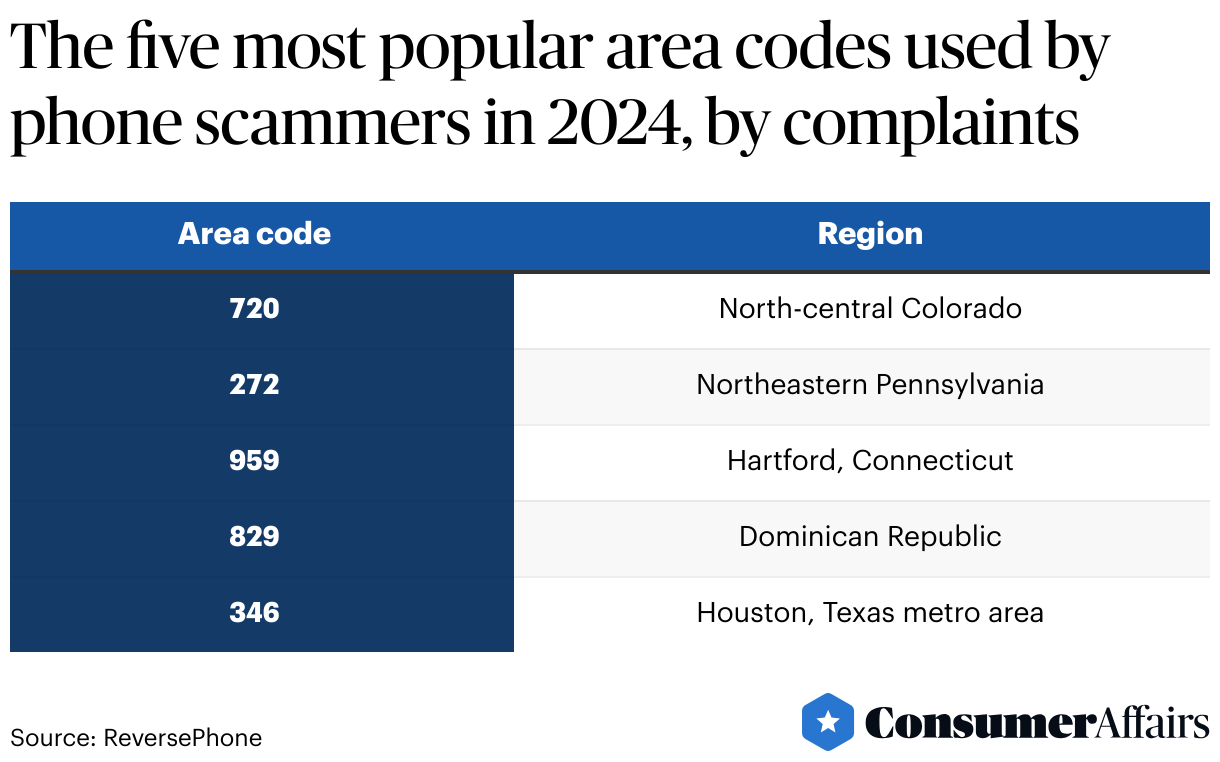
The five most popular area codes for scammers in 2024 were 720 in Colorado, 272 in Pennsylvania, 959 in Connecticut, 829 in the Dominican Republic and 346 in Texas.
For phone numbers with the most complaints about scam calls in 2024, the top five were(763) 274-3899,(217) 402-1312, (202) 456-1111,(662) 255-3743 and(325) 244-7821.
ReversePhone said people should consider blocking these numbers, especially the top three since they hadmore than two hundred complaints each.
The top 10 most popular phone numbers scammers used are listed below.
What are the most common phone scams?
After romance scams, which are the most popular, ReversePhone said the top five scams to watch out for arebusiness impostors, banks, debt collection and credit cards, according to complaints.

Here's on how common phone scams work:
- Business impostor scams typically start with a criminal pretending to be a legitimate business, including by sharing fake websites and logos. Best Buy and Amazon were the two most impersonated companies in 2023, according to the Federal Trade Commission.
- Bank scamstrickvictims into believingthey are a bank and needa code, a wire transfer or remote access to a computer.
- Debt collection scamsinvolve intimidation, such as legal action or taking wages, to convince people into paying non-existent debts.
- Credit card scamsofteninvolve trickingvictimsto hand over sensitive information after saying a person's credit card has been overcharged, claiming they can reduce an interest rate and bogus calls from federal agencies to get someone to use a credit card to pay off debt, fines, tickets or taxes.
Source Link


.jpg)

