

Jackson Biopic Becomes Sanitized Myth
koowipublishing.com/Updated: 27/04/2026
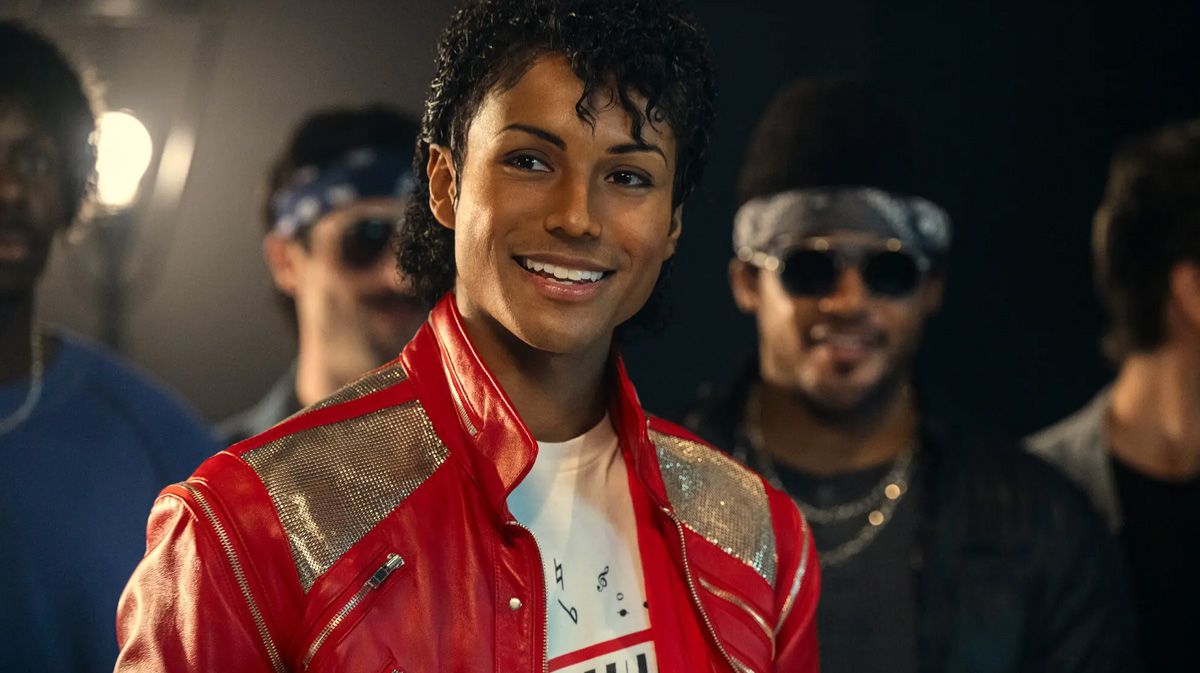
Description
“Michael,” a biopic produced by Michael Jackson’s estate, turns his life into a polished spectacle that avoids the most troubling parts of his story. While the film delivers the expected concert highlights and showcases his musical genius, it ultimately feels like an image-management project rather than a searching portrait of a complicated figure.
Early in the film, a scene in which Berry Gordy suggests that a young Jackson lie about his age hints at a theme about fabrication in show business, but the review says the movie never fully explores it. An earlier version of the film reportedly centered on the 1993 child sexual abuse allegations and was designed to exonerate Jackson, but that cut was scrapped when estate lawyers realized a settlement barred its release.
The finished film instead reframes Jackson’s story as an inspirational saga about overcoming his domineering father, Joe Jackson. This late pivot, the critic notes, is evident in the clumsy final act, which pushes a fairy-tale arc in which the adult Michael escapes his family’s control and secures a tidy, uplifting ending.
Structurally, “Michael” follows the most conventional musician-biopic formula, from the opening backstage walk toward a roaring crowd to the obligatory flashback to a cramped childhood home in Gary, Indiana. The script traces the Jackson 5’s brutal rehearsal regimen, the belt beatings from Joe, and the family’s rise to fame, while conspicuously omitting siblings who are not executive producers of the film.
As Michael grows older, the movie shows him as isolated despite his fame, with only his mother, a loyal bodyguard, and lawyer John Branca in his inner circle. The review notes that Branca is also a producer, underlining how the estate’s hands-on role shapes which relationships are foregrounded and how sympathetic they appear.
The critic faults the film for skipping the messy creative process that usually animates artist biopics. Jackson appears almost preternaturally complete as an artist, with hits emerging effortlessly and obstacles reduced to minor negotiations like convincing MTV to play “Billie Jean.”
“Michael” presents its subject as a kind of angelic figure whose eccentricities are blamed on childhood trauma at the hands of Joe. Choices like acquiring the chimp Bubbles or undergoing plastic surgery on his nose are explained as defensive responses to abuse or self-loathing, rather than expressions of ego or complexity.
The movie leans heavily on the idea that Jackson’s lost childhood justifies his later fixation on being around children. To counter the audience’s suspicions, it repeatedly stages scenes of him visiting sick kids in hospitals, observed by approving onlookers, as if to insist on his pure intentions.
For the reviewer, this approach turns Jackson into a flattened, almost inhumanly virtuous figure. The film fits into a broader pattern of estate-backed projects that sanitize famous subjects, assuming viewers cannot handle depictions of anger, ego, or moral ambiguity even though those traits might actually make them more relatable.
Despite strong musical numbers and a committed performance from Jaafar Jackson, who convincingly channels his uncle’s dancing, the review says the movie plays like an overlong greatest-hits reel. These set pieces are stitched together in a way the critic finds repetitive and tonally false, doing a disservice both to Jackson’s artistry and to the audience’s intelligence.
Crucially, the film ends its narrative before the darkest parts of Jackson’s life, turning genuine crises into motivational fuel and erasing their consequences. His scalp burns and subsequent surgery, for instance, are reimagined as inspiration for his determination to “shine my light” rather than as a gateway to painkiller addiction, and his 1988 Wembley performance functions as an implied happily-ever-after.
The review places “Michael” in the context of the estate’s broader efforts to protect Jackson’s legacy, including legal actions that helped remove the documentary “Leaving Neverland” from streaming. In the critic’s view, the film ends up offering the perfectly controlled, unthreatening version of Jackson that Joe Jackson once demanded: a flawless performer and perpetual child, crafted to be believed in rather than truly known.
Source Link


.jpg)

